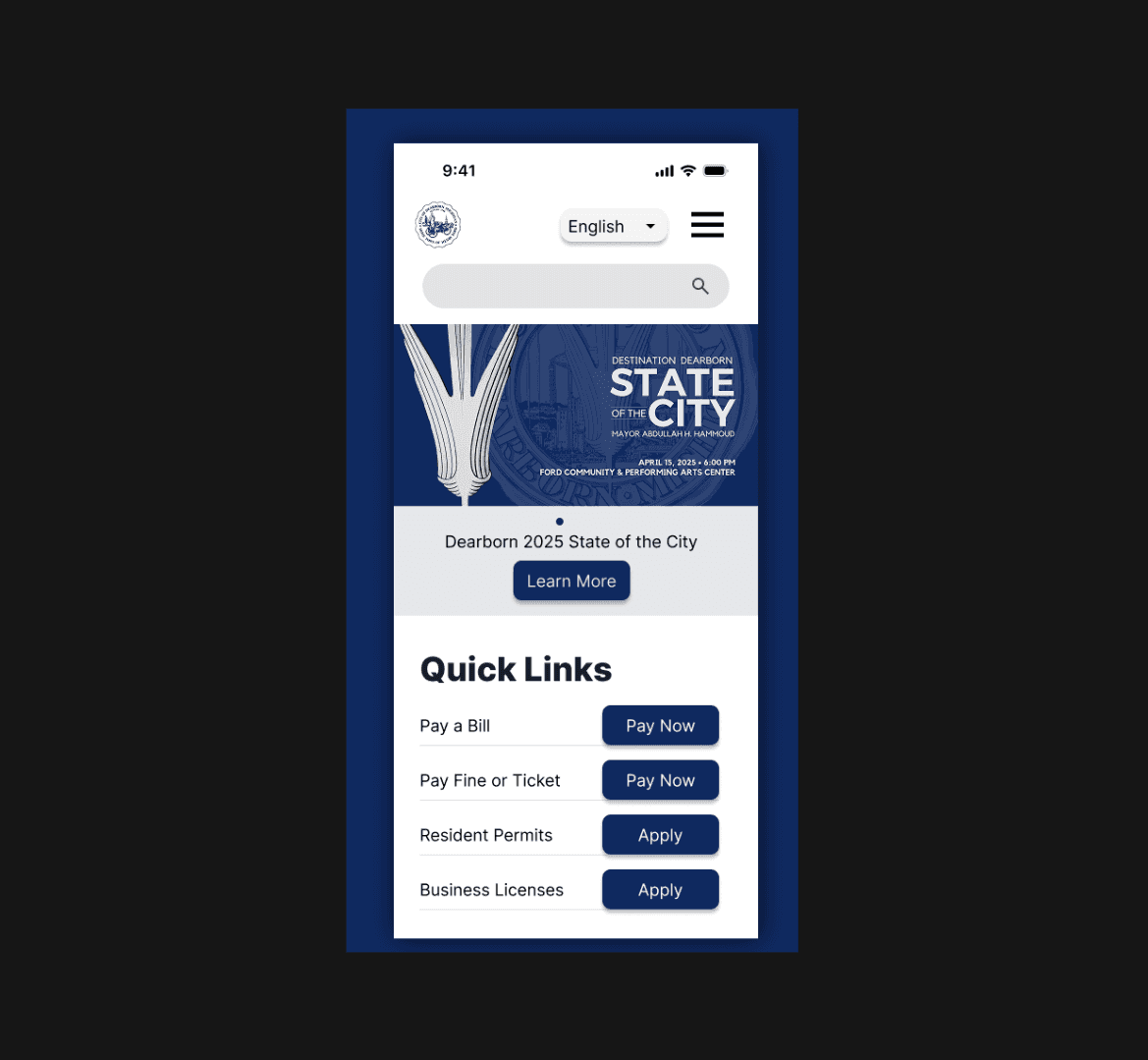
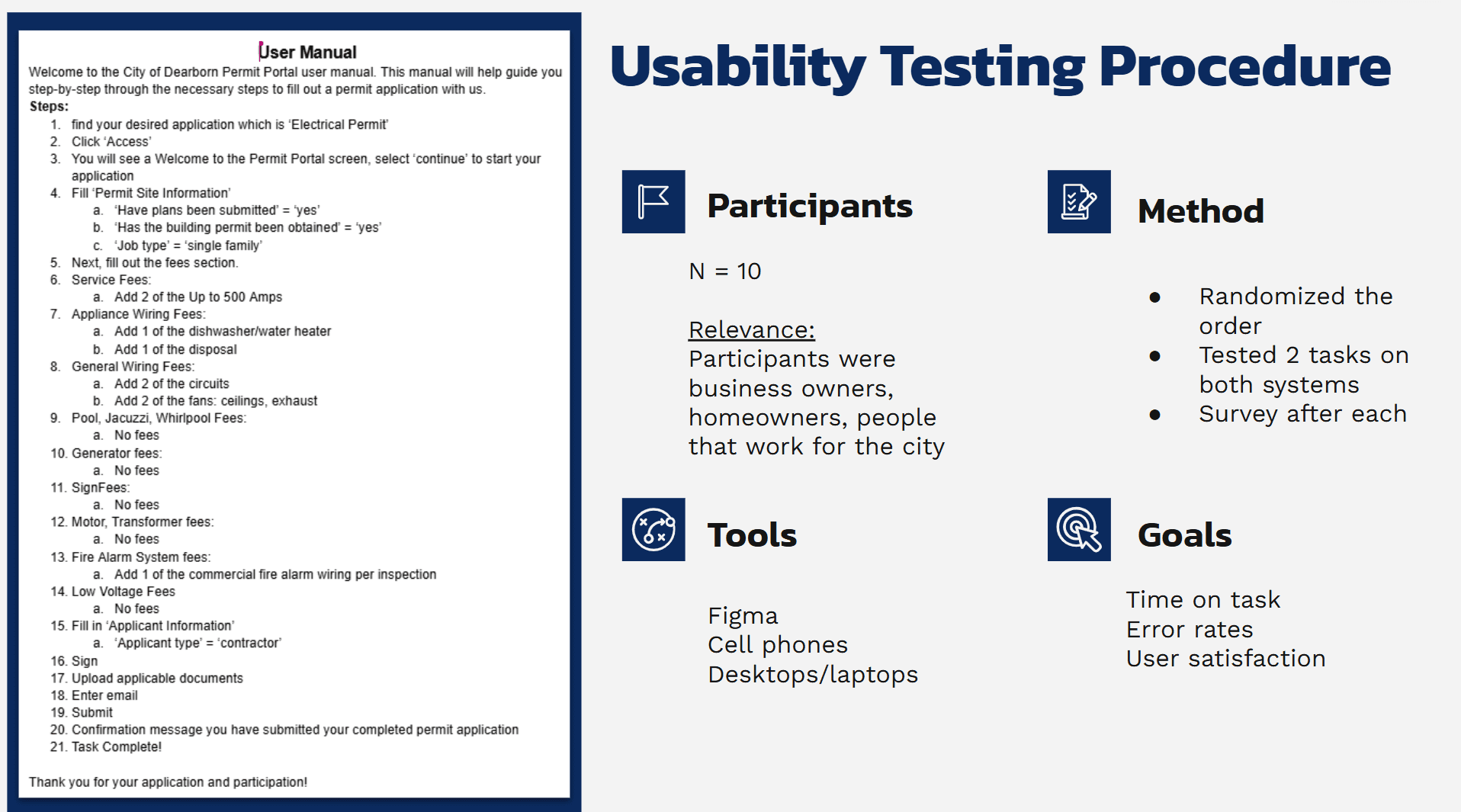
As part of my Master of Science in Human-Centered Design and Engineering program at the University of Michigan-Dearborn, I conducted a comprehensive redesign of the City of Dearborn’s mobile website. The goal of this project was to improve usability, accessibility, and overall user satisfaction for local residents, homeowners, and business owners who rely on the city’s digital services. Using methods such as think-aloud testing and usability surveys, I gathered qualitative and quantitative insights into how users interact with the current mobile system. This user-centered approach allowed me to identify key pain points in navigation, error prevention, and system feedback that hindered the overall user experience.
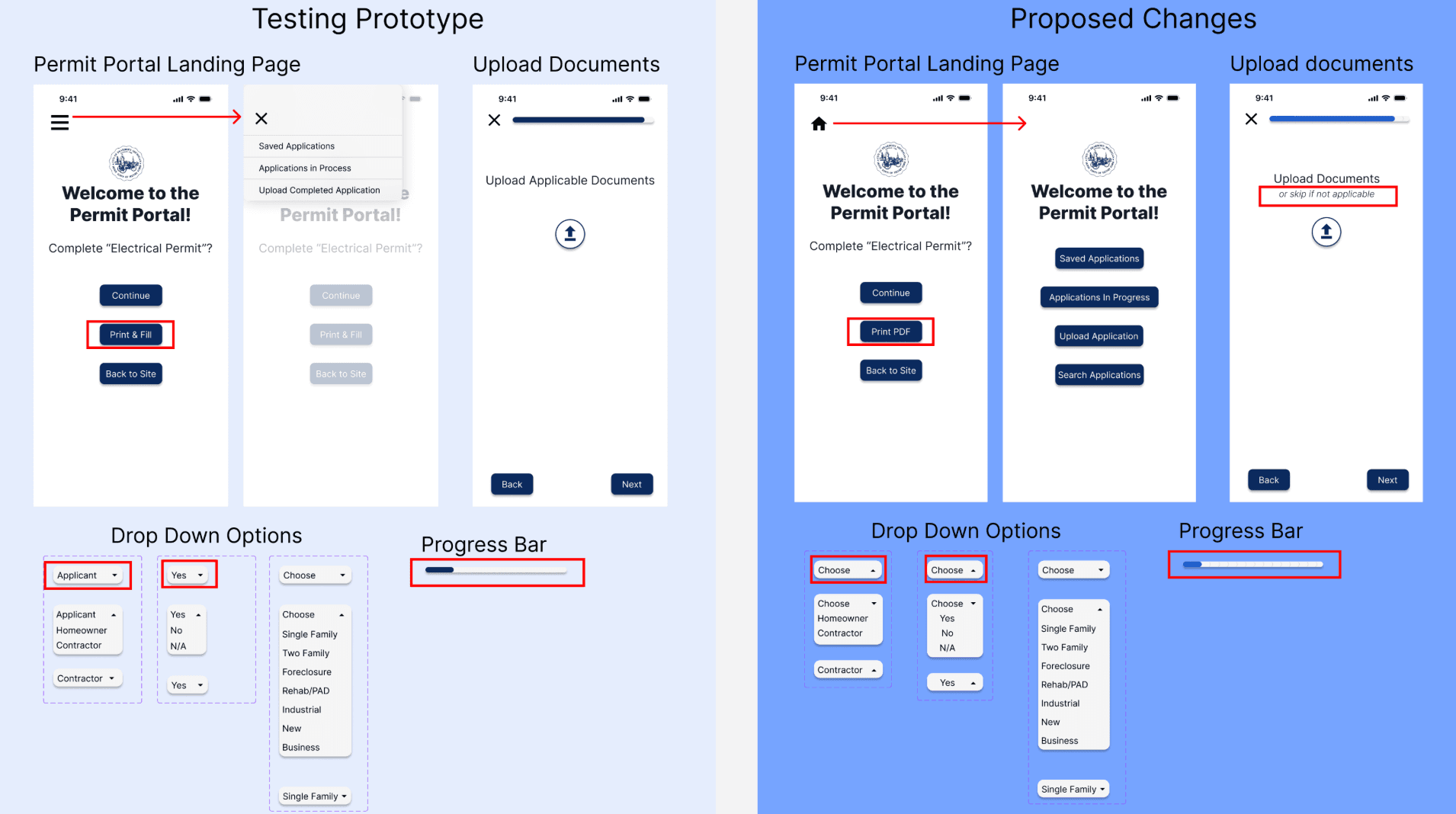
Through iterative prototyping in Figma, I developed and tested a new mobile interface that addressed these usability challenges. The redesign demonstrated statistically significant improvements in performance metrics and user satisfaction. For example, task completion times dropped sharply (from 624.41 seconds to 216.42 seconds in one test), and satisfaction scores increased across all survey dimensions—including recoverability, error prevention, and visibility of system status. These results validated that design changes grounded in human-centered research can have a measurable impact on efficiency and satisfaction.
Through iterative prototyping in Figma, I developed and tested a new mobile interface that addressed these usability challenges. The redesign demonstrated statistically significant improvements in performance metrics and user satisfaction. For example, task completion times dropped sharply (from 624.41 seconds to 216.42 seconds in one test), and satisfaction scores increased across all survey dimensions—including recoverability, error prevention, and visibility of system status. These results validated that design changes grounded in human-centered research can have a measurable impact on efficiency and satisfaction.
Through iterative prototyping in Figma, I developed and tested a new mobile interface that addressed these usability challenges. The redesign demonstrated statistically significant improvements in performance metrics and user satisfaction. For example, task completion times dropped sharply (from 624.41 seconds to 216.42 seconds in one test), and satisfaction scores increased across all survey dimensions—including recoverability, error prevention, and visibility of system status. These results validated that design changes grounded in human-centered research can have a measurable impact on efficiency and satisfaction.