AV Mobile and Dashboard Design
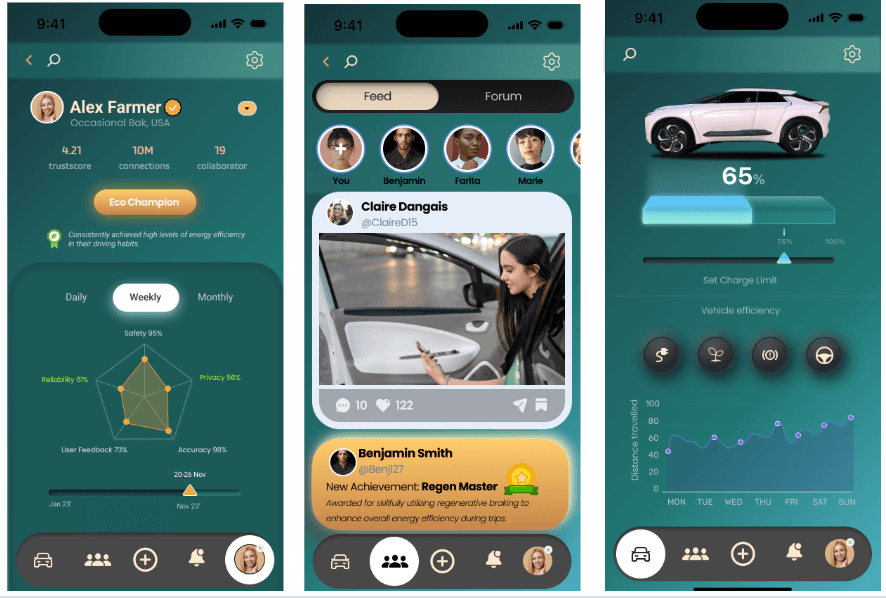
This project, developed as part of my Master of Science in Human-Centered Design and Engineering program at the University of Michigan–Dearborn, focused on building trust between young drivers and autonomous vehicles (AVs). The design challenge asked: How might I cultivate trust between young drivers (ages 16–25) and AVs? To answer this, I conducted user interviews, secondary research, and persona development to better understand the skepticism and concerns surrounding AV adoption. I found that young drivers often worried about losing control, the reliability of detection features, and how vehicles might respond under extreme conditions. These insights shaped the foundation of my design approach.
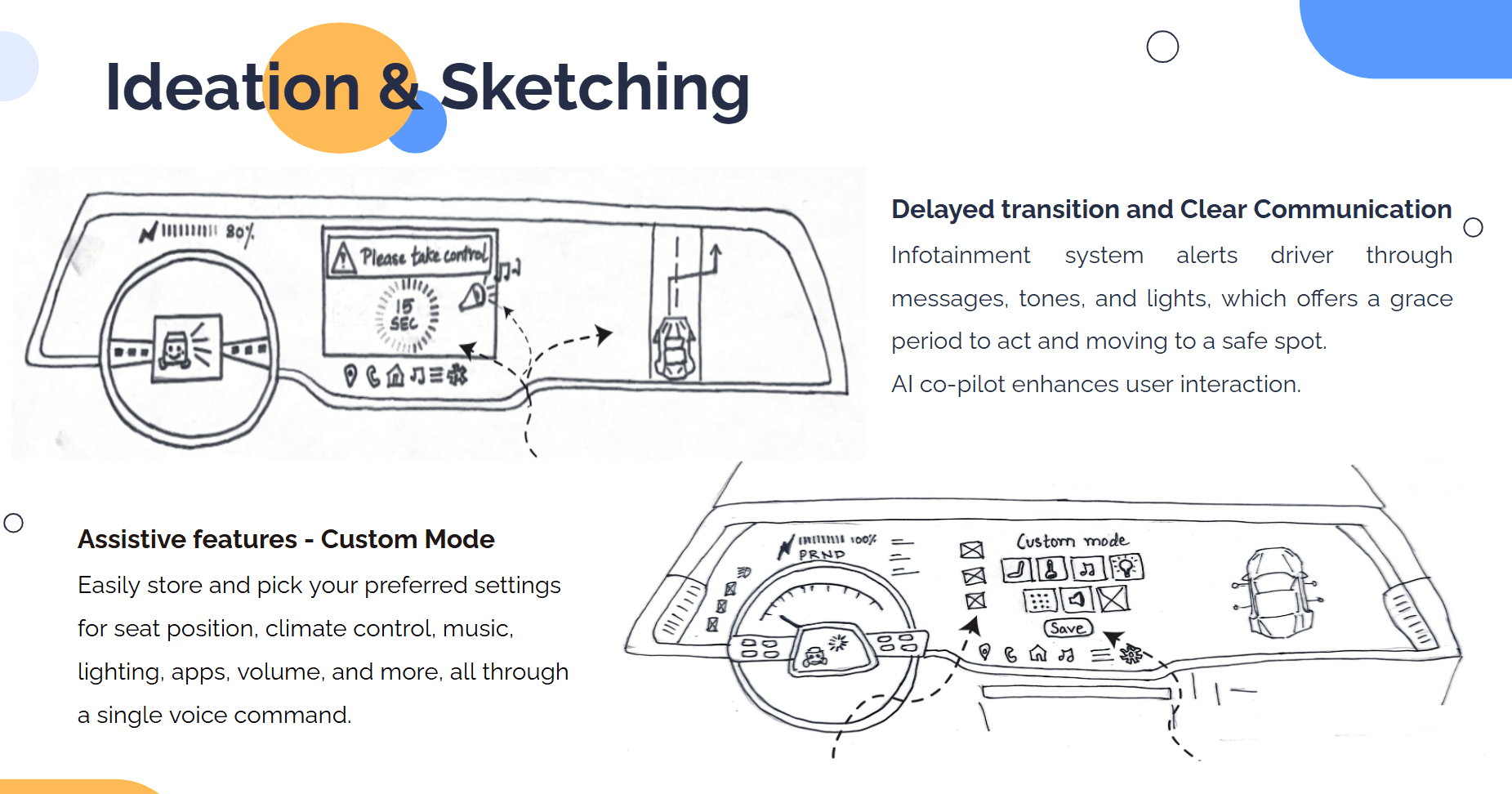
Through ideation methods like Crazy 8s, I explored solutions that emphasized clear communication, personalization, and community engagement. The resulting prototypes included an AI co-pilot that delivered route recommendations, customizable driver settings stored as “modes,” and infotainment system alerts designed to provide transparent, gradual transitions when drivers needed to regain control. I also designed a mobile app that allowed users to build trust through access to vehicle data, trip history, and peer feedback. I created both low-fidelity sketches and high-fidelity Figma prototypes to bring these concepts to life, making iterative improvements based on internal testing and survey feedback.
Through ideation methods like Crazy 8s, I explored solutions that emphasized clear communication, personalization, and community engagement. The resulting prototypes included an AI co-pilot that delivered route recommendations, customizable driver settings stored as “modes,” and infotainment system alerts designed to provide transparent, gradual transitions when drivers needed to regain control. I also designed a mobile app that allowed users to build trust through access to vehicle data, trip history, and peer feedback. I created both low-fidelity sketches and high-fidelity Figma prototypes to bring these concepts to life, making iterative improvements based on internal testing and survey feedback.
Through ideation methods like Crazy 8s, I explored solutions that emphasized clear communication, personalization, and community engagement. The resulting prototypes included an AI co-pilot that delivered route recommendations, customizable driver settings stored as “modes,” and infotainment system alerts designed to provide transparent, gradual transitions when drivers needed to regain control. I also designed a mobile app that allowed users to build trust through access to vehicle data, trip history, and peer feedback. I created both low-fidelity sketches and high-fidelity Figma prototypes to bring these concepts to life, making iterative improvements based on internal testing and survey feedback.
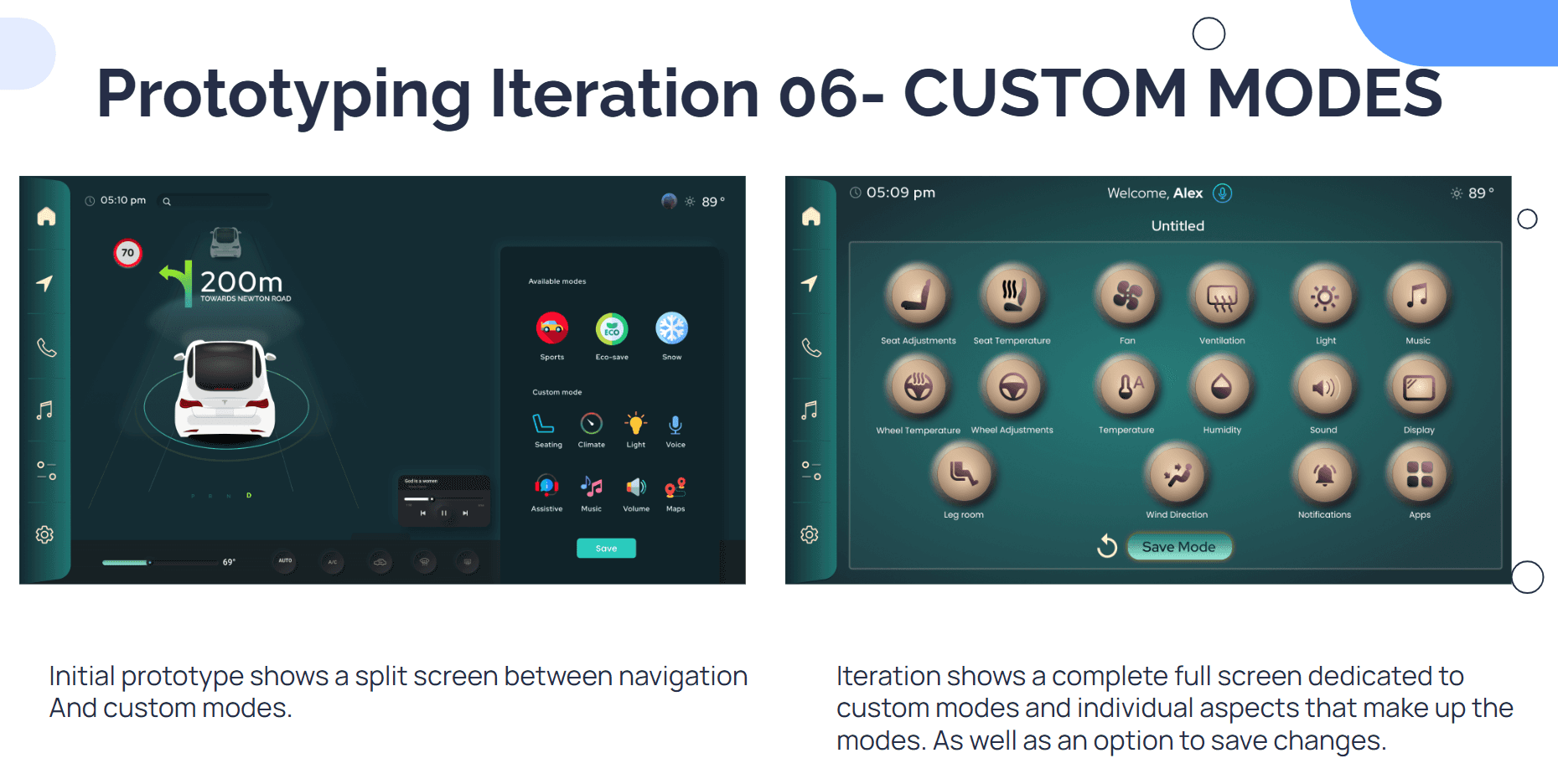
Testing with young drivers validated my emphasis on usability and transparency. Quantitative surveys and qualitative think-aloud testing revealed that users valued personalized guidance, intuitive assistive features, and open communication from the AV system. Feedback also highlighted areas for growth, such as increasing transparency around data use and privacy. In reflection, this project emphasized the importance of trust-building in emerging technologies and the role of human-centered methods in bridging the gap between skepticism and adoption. This experience not only strengthened my design skills but also reinforced the HCDE program’s focus on aligning advanced technologies with human values and needs.
Want to view the whole project? Click here —> https://docs.google.com/presentation/d/1mfCASdt1AsO-083Kaqh4KJq6JEbqkml7RFATB_Z8pJI/edit?usp=sharing
Testing with young drivers validated my emphasis on usability and transparency. Quantitative surveys and qualitative think-aloud testing revealed that users valued personalized guidance, intuitive assistive features, and open communication from the AV system. Feedback also highlighted areas for growth, such as increasing transparency around data use and privacy. In reflection, this project emphasized the importance of trust-building in emerging technologies and the role of human-centered methods in bridging the gap between skepticism and adoption. This experience not only strengthened my design skills but also reinforced the HCDE program’s focus on aligning advanced technologies with human values and needs.
Want to view the whole project? Click here —> https://docs.google.com/presentation/d/1mfCASdt1AsO-083Kaqh4KJq6JEbqkml7RFATB_Z8pJI/edit?usp=sharing
Testing with young drivers validated my emphasis on usability and transparency. Quantitative surveys and qualitative think-aloud testing revealed that users valued personalized guidance, intuitive assistive features, and open communication from the AV system. Feedback also highlighted areas for growth, such as increasing transparency around data use and privacy. In reflection, this project emphasized the importance of trust-building in emerging technologies and the role of human-centered methods in bridging the gap between skepticism and adoption. This experience not only strengthened my design skills but also reinforced the HCDE program’s focus on aligning advanced technologies with human values and needs.
Want to view the whole project? Click here —> https://docs.google.com/presentation/d/1mfCASdt1AsO-083Kaqh4KJq6JEbqkml7RFATB_Z8pJI/edit?usp=sharing